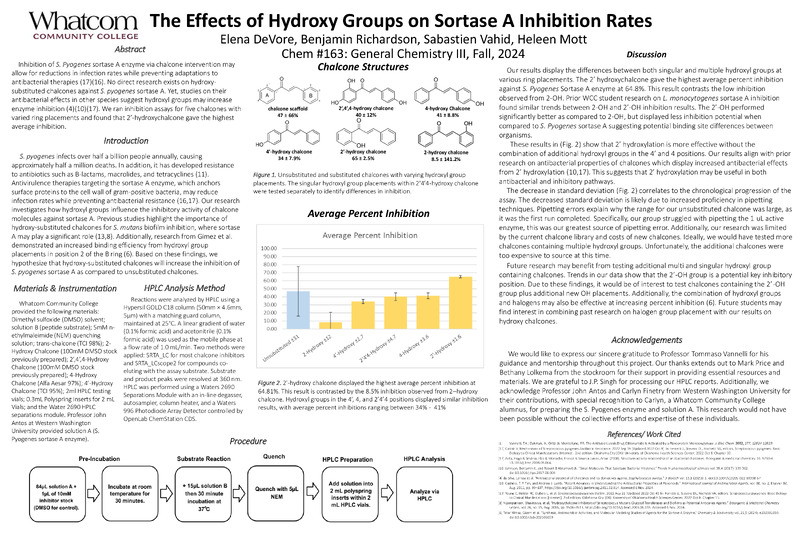
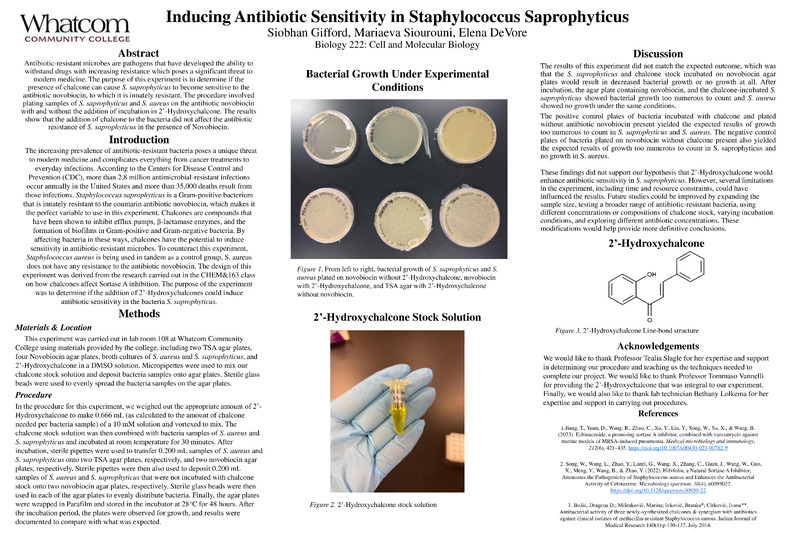
This experiment was to determine if we could induce antibiotic sensitivity in Staphylococcus saprophyticus to the antibiotic novobiocin--to which the bacteria is innately resistant, through the addition of 2'-Hydroxychalcone.
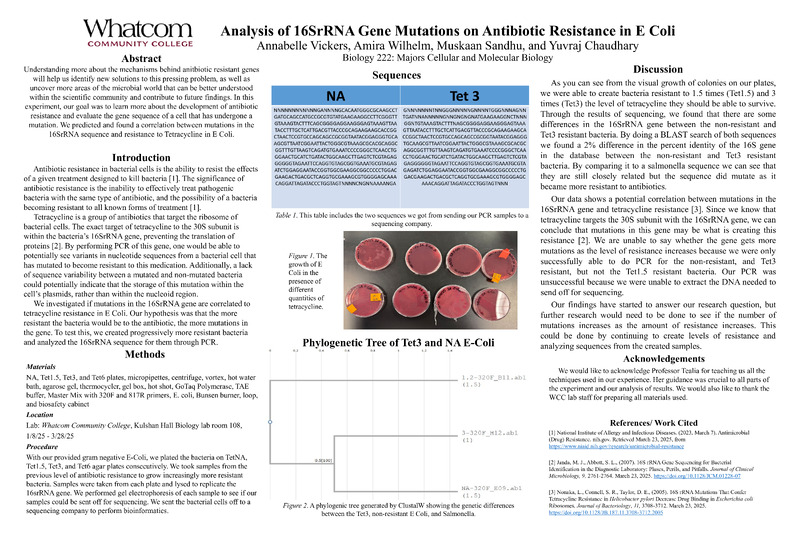
In this experiment, our goal was to learn more about the development of antibiotic resistance and evaluate the gene sequence of a cell that has undergone a mutation. We predicted and found a correlation between mutations in the 16SrRNA sequence and resistance to Tetracycline in E Coli.
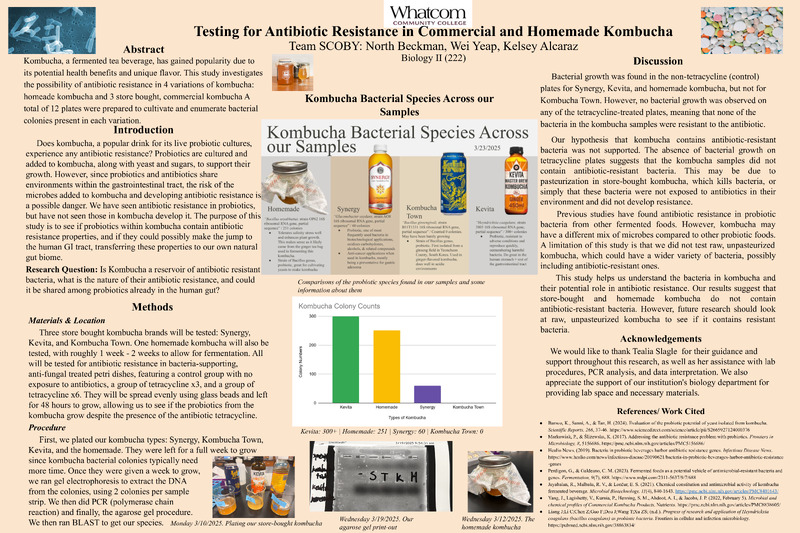
In this research presentation we explore the possibilities of antibiotic resistance in the popular drink known as kombucha, and proving whether or not it is a reservoir for antibiotic resistance in Homemade as well as Commercial kombucha.
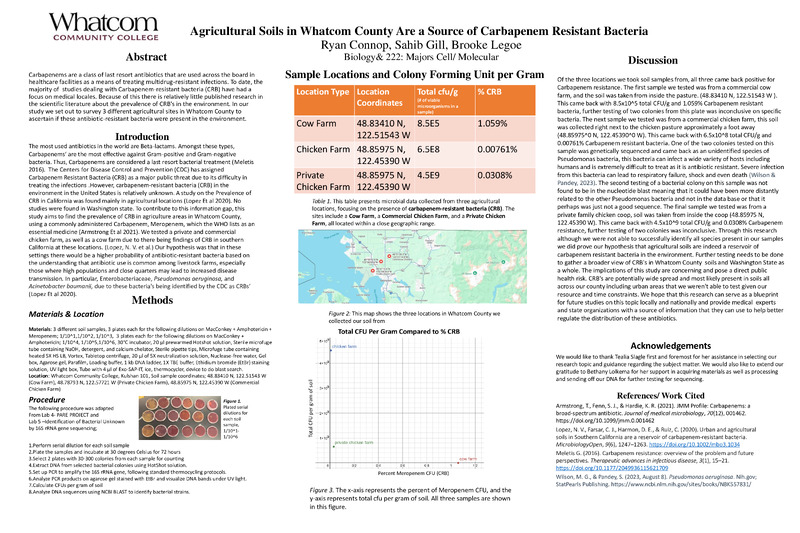
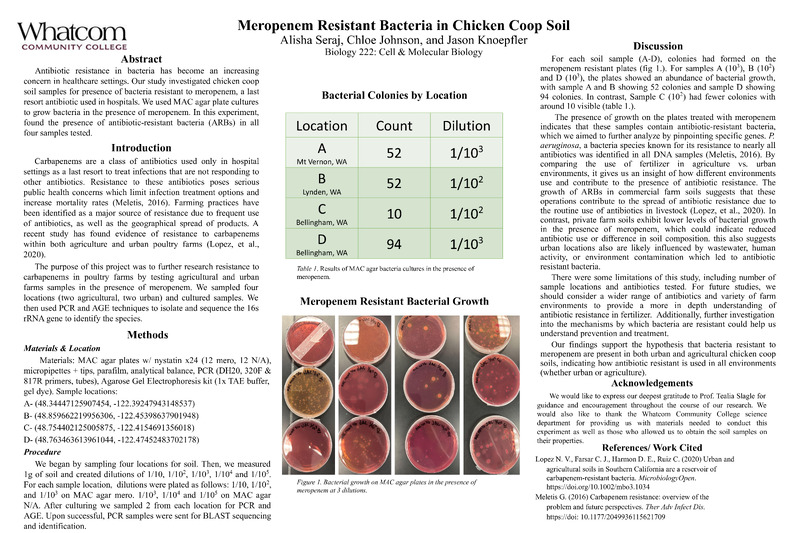
we investigated chicken coop soil samples for presence of bacteria resistant to meropenem. We sampled four locations (two agricultural, two urban) and cultured samples
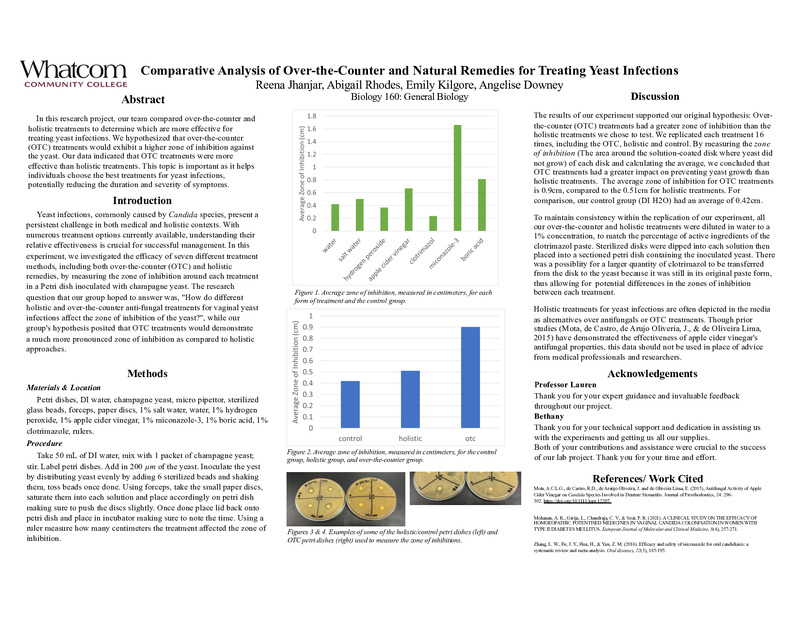
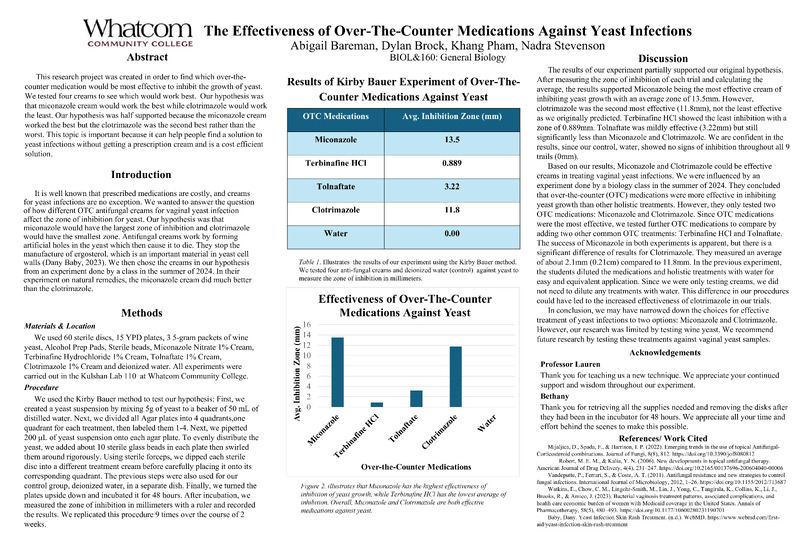
This research project was created in order to find which over-the-counter
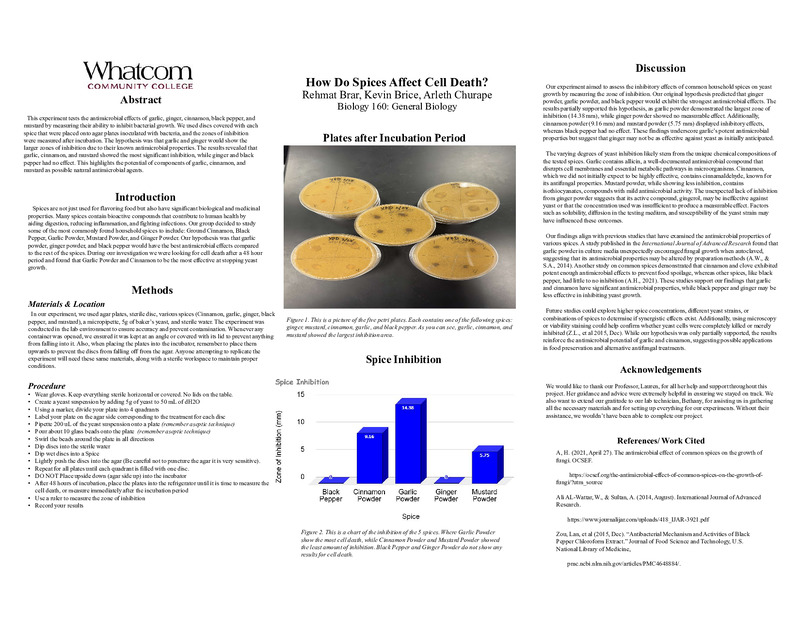
medication would be most effective to inhibit the growth of yeast. This poster shows how we conducted the testing and our results.
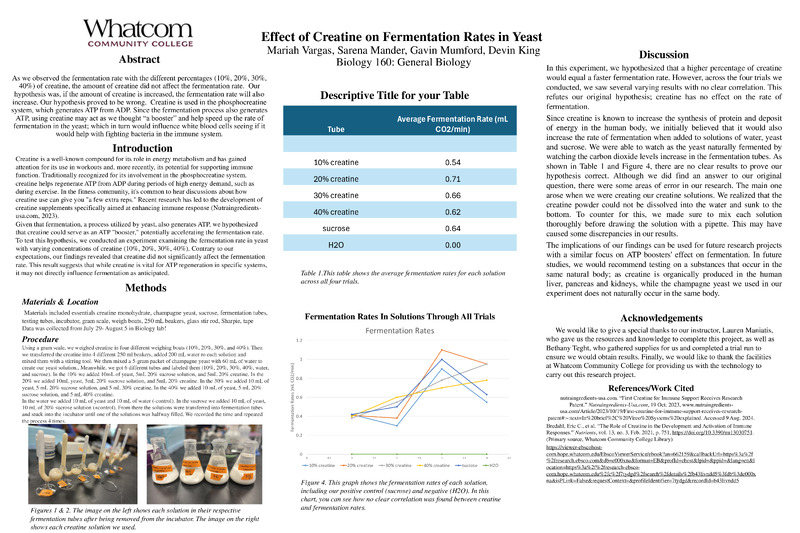
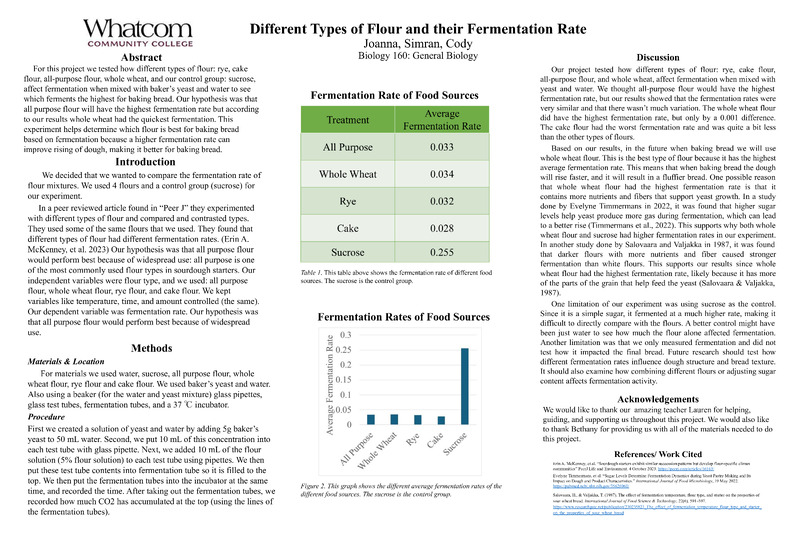
For this project we tested how different types of flour: rye, cake flour, all-purpose flour, whole wheat, and our control group: sucrose, affect fermentation when mixed with baker’s yeast and water to see which ferments the highest for baking bread.
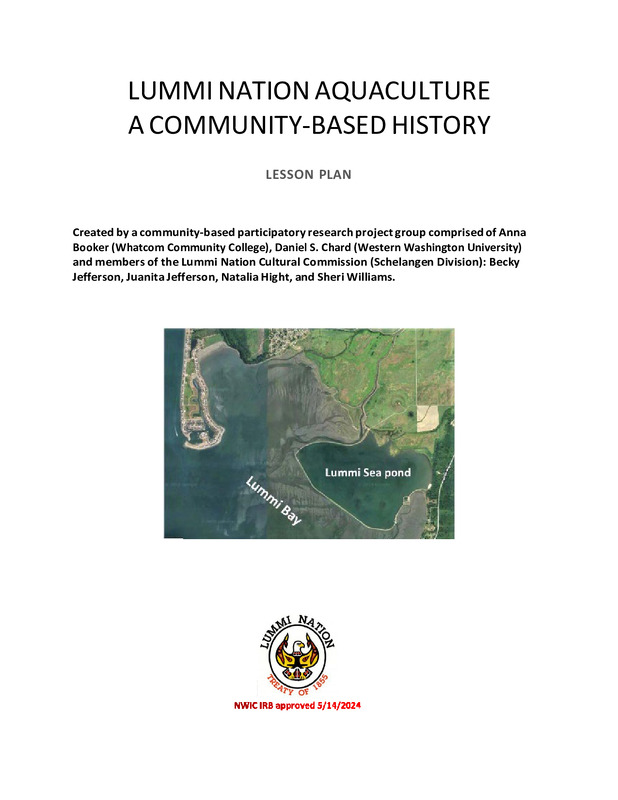
The 45-page lesson plan, Lummi Nation Aquaculture: A Community-Based History, asks students to answer the historical question, “Why did the Lummi Nation build an aquaculture facility in the 1970s?” It includes a five-page background lecture, a PowerPoint presentation with limited text, a timeline, eight annotated primary sources, and guided reading and research questions that help students grapple with written evidence and formulate an interpretation. In most cases, the source is followed by "Notes from the Schelangen Division." Schelangen is a Lummi language word that refers to the Lummi “way of life"; the Schelangen Division is another name for the Lummi Nation Cultural Commission. The Lummi Nation Cultural Commission members created the "Notes from the Schelangen Division" during the Community-Based Participatory Research Project meetings, which were essential to this lesson plan. These Notes provide Lummi perspectives on the primary source documents and their significance. The research and design process, which began in the Summer of 2021, involved several applications and intensive rewriting to meet the standards and protocols of the Northwest Indian College’s Institutional Review Board.
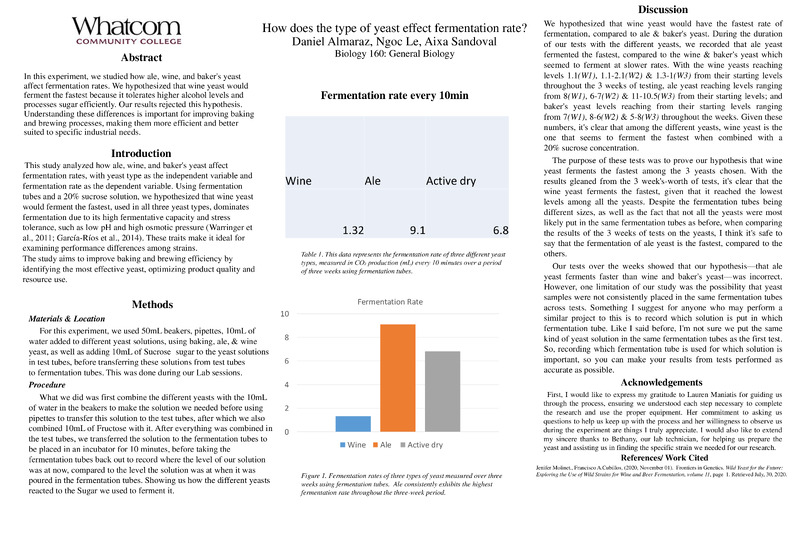
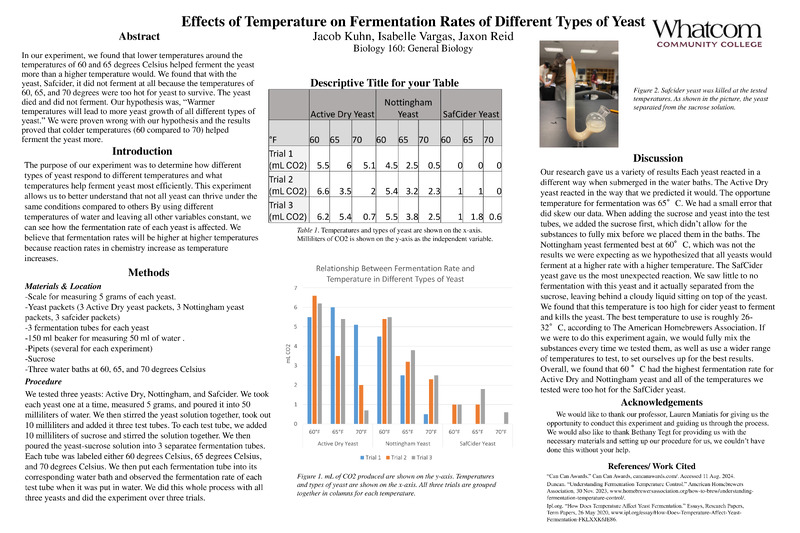
This experiment tested how ale, wine, and baker's yeast affect fermentation speed. The results showed that ale yeast fermented the fastest, even though the group thought wine yeast would be the fastest.
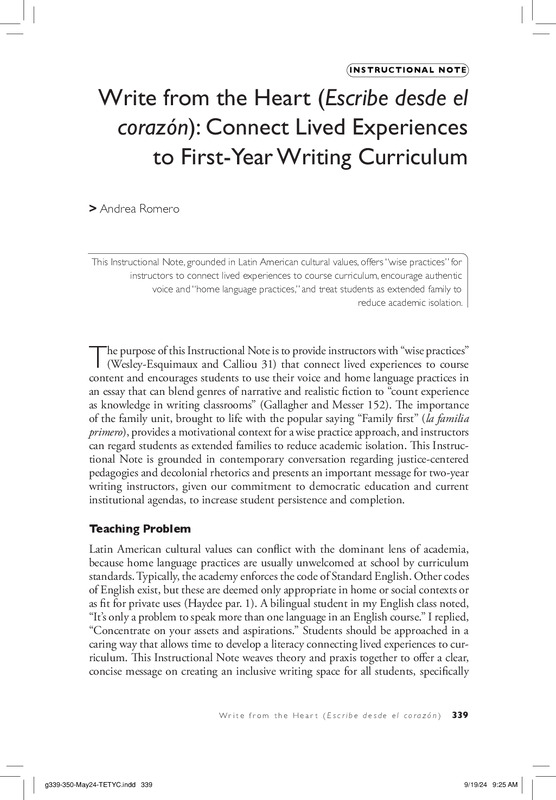
This Instructional Note, grounded in Latin American cultural values, offers wise practices for instructors to connect lived experiences to course curriculum, encourage authentic voice and home language practices, and treat students as extended family to reduce academic isolation.
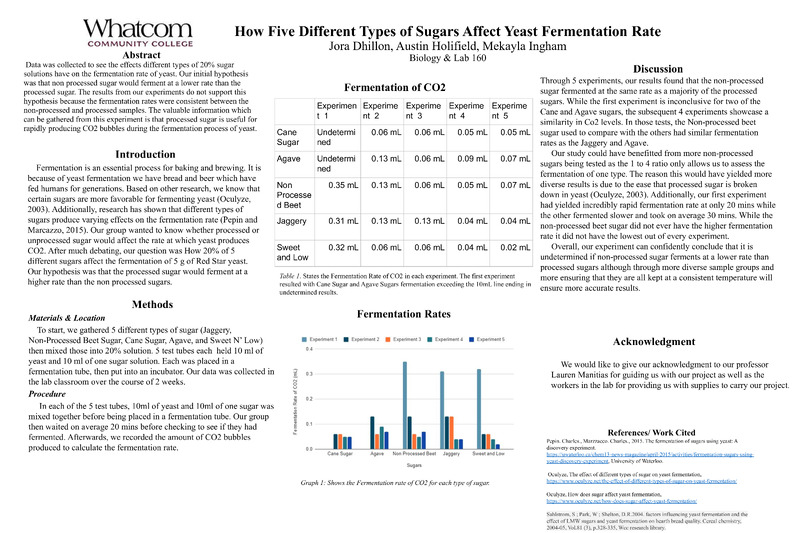
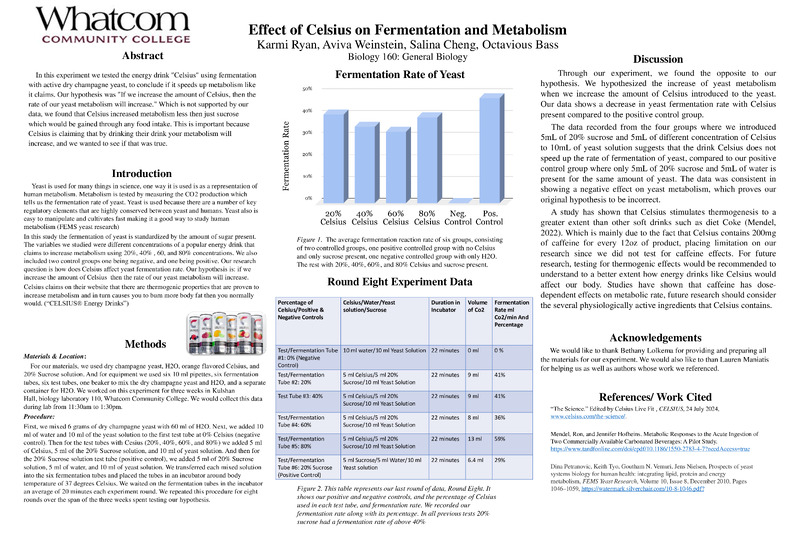
Data was collected to see the effects different types of 20% sugar solutions have on the fermentation rate of yeast. Our initial hypothesis was that non processed sugar would ferment at a lower rate than the processed sugar.
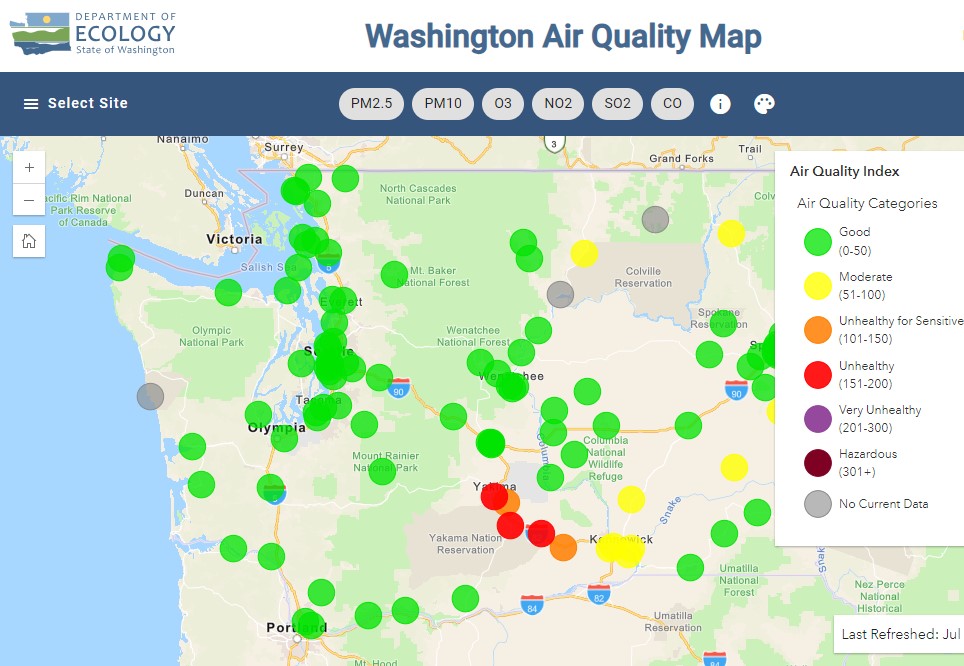
"The map draws accurate, real-time air quality data from our network of 80+ monitoring stations. It displays a color-coded guide to pollution levels based on the national Air Quality Index (AQI)."
An introduction to the complex ecologies and human experiences of theSalish Sea region. This interdisciplinary course introduces students to content in the natural and social sciences, and integrates experiential learning through local regional field trips, including cross-border experiences.
This course is about examining the Salish Sea through multiple disciplinary lenses in order to appreciate the complexity of this region. This project will allow you to dig deeper into one facet of this region pursuing an area of interest by asking a question to which there is no apparent known answering an effort to expand our larger collective knowledge about this region. This project is both a way to synthesize much of what you've been learning in this class through a multidisciplinary lens, but it also will help you practice other important life skills like effective communication and building collaboration skills.
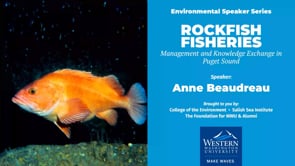
Rockfishes (Sebastes spp.) are a group of long-lived Pacific fishes that are susceptible to overharvest in commercial and recreational fisheries due to their life history and site fidelity. Different histories of rockfish fishery development throughout their range have led to varying management challenges for these species, including the listing of two rockfish species under the Endangered Species Act in Puget Sound. In this talk, I will present stories of rockfish fisheries in Puget Sound from community, policy, and science perspectives. Using examples drawn from our research over the last decade, I will highlight ways in which fishers’ knowledge, stewardship, and innovation are contributing to improved conservation and management of rockfish.
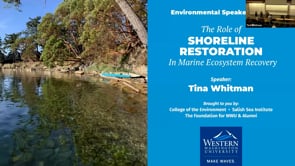
With over 400 miles of marine shoreline located in the heart of the Salish Sea, nearshore habitats in the San Juan Archipelago play a key role in local and regional marine ecosystem recovery. Learn more about collaborative shoreline research, protection, and restoration efforts in the islands, including successes, challenges, and opportunities for the future.
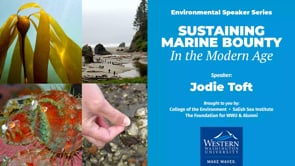
At the core of marine resilience is a thriving portfolio of marine species and habitats and our strong connections to them. At Puget Sound Restoration Fund (PSRF), this tenet drives our work - collaboratively spearheading a diverse set of in-water projects throughout the southern Salish Sea. Our main focus is restoring living marine habitat and species, using structure forming species (Olympia oysters, bull kelp) and habitat enhancing species (pinto abalone), but also with a keen eye to species of paramount importance to Tribes (heart cockles) and other communities Sound-wide (Dungeness crab). These species are critical to the food web, too, and maintain the living marine architecture that supports the marine ecosystem in Puget Sound and beyond. Robust restoration of these core elements has ripple effects, boosting function and providing direct and indirect support to fish and marine mammals throughout the food web as they face compounding effects of climate change. In this talk, I will highlight the work that PSRF and partners are doing in service of: improved water quality, increased abundance of native species, additional acres of restored habitat, enhanced ecological benefits, and re-forged connections with healthy marine resources.
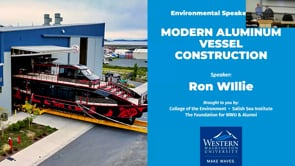
Join Ron as he describes the modern construction techniques used and the features incorporated into new vessels being constructed by local Bellingham boat builder, All American Marine, Vessels and features discussed will include catamarans, hydrofoils, hybrid boats and the world’s first hydrogen fuel cell powered passenger vessel.
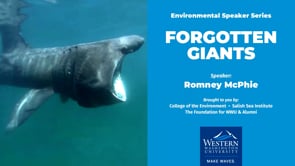
If you're surprised to hear that the 2nd largest fish on the planet used to be abundant in the shared waters of British Columbia and Washington, you're not alone! Now almost forgotten, the Basking Shark (Cetorhinus maximus) - which reaches sizes of up to 12 m (40 ft) - used to be abundant from British Columbia, Canada to Baja California, Mexico. Although these giant filter-feeders are harmless to humans, they were hunted and persecuted throughout much of the 20th century, first for their oil-rich livers and then because they were impeding profitable salmon fisheries by getting tangled in gillnets. In British Columbia in 1949, they were put on the Canadian Department of Fisheries and Oceans list of 'destructive pests', and from 1955 to 1969 a Federal eradication program was directed at them. Today, only a handful of sightings are reported from throughout British Columbia and Washington each year. Can this enigmatic wonder of our ocean world that has survived as a species for at least 30 million years recover here in the Northeast Pacific? How has our treatment of them shifted and what might we do to better understand them and their habitat, and 'turn the tide' for them, and for us?
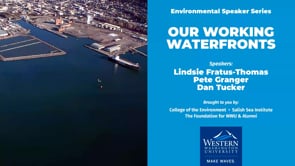
The breadth of the economic impact of the maritime sector in Whatcom County is wide, and the Port of Bellingham has a dominant role as owner of most waterfront properties in Bellingham and Blaine. In this talk you will learn about the many aspects of a working waterfront, including major development projects, environmental clean-up programs, introduction to the local commercial seafood industry and stream rehabilitation and salmon enhancement. The Whatcom Working Waterfront Coalition is made up of over 120 members (companies, associations and individuals) that help keep Whatcom’s waterfronts working. Learn how the Coalition is involved in these various projects and works alongside coastal leaders to catalyze community sustainability and ensure thriving and diverse waterfronts that all can enjoy.
![[Untitled]](https://whatcomdigitalcommons.org/files/large/2fd5404b86191ff3f4f54f8d57e5dab85488f913.jpg)